
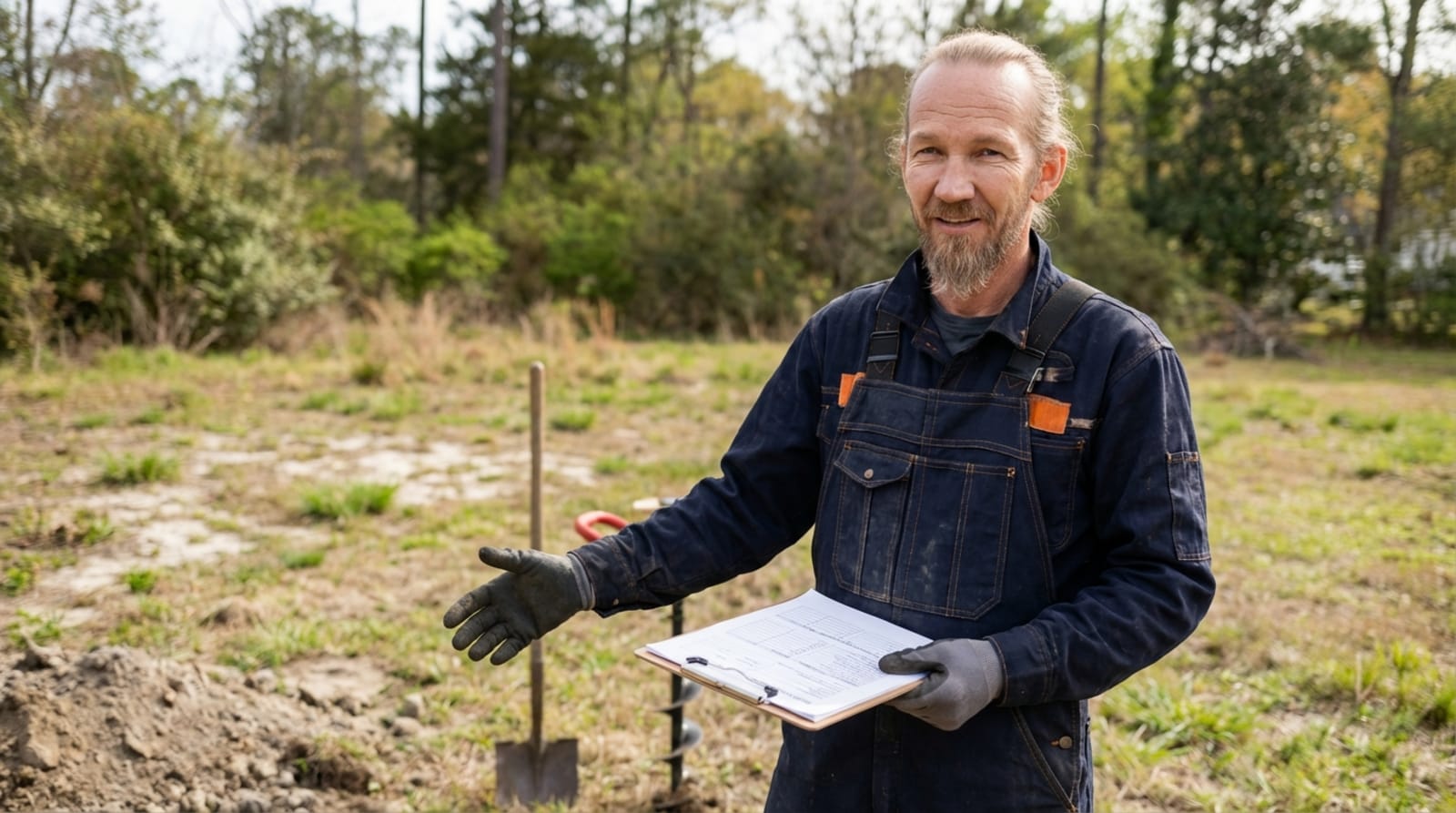
What Is Required for a New Construction Septic System in Wilmington NC?
A new construction septic system in Wilmington NC must be soil-tested, engineered to your bedroom count, approved by New Hanover County Environmental Health, and installed to North Carolina Department of Health and Human Services (NCDHHS) standards before a certificate of occupancy can be issued. We provide complete septic tank services Wilmington NC homeowners and builders rely on—handling everything from initial Site Evaluation through Design & Permits and final installation.
If you are still comparing providers, you can view our full scope of Our Services or return to Septic Wilmington NC for an overview of how we support new builds.
Building a new home in coastal North Carolina requires more than simply placing a tank in the ground. Your septic system must be designed around sandy soils, seasonal high water tables, FEMA flood considerations, driveway layouts, and strict county setback rules. When septic planning starts early—before foundations are poured—you avoid redesign fees, construction delays, and last‑minute permit revisions. We coordinate directly with builders and county officials to keep approvals moving, inspections scheduled, and installations aligned with your build timeline so your project stays on track from lot clearing to final occupancy.
How the New Septic Installation Process Works
1. Soil Evaluation and Site Review
Every system begins with a professional soil and site evaluation. This determines:
- Soil texture and absorption rate
- Seasonal high water table depth
- Required setbacks from wells, property lines, and wetlands
- Available drain field area and reserve repair area
If your lot has not yet been evaluated, we coordinate the required Site Evaluation before design begins.
2. Septic System Design & County Permitting
Once soil data and bedroom count are confirmed, we design a code-compliant system. In Wilmington and surrounding communities like Ogden, Porters Neck, Myrtle Grove, and Leland, most homes qualify for conventional gravity systems. However, high groundwater or restrictive soils may require:
- Low-Pressure Pipe (LPP) systems
- Modified conventional trench systems
- Other engineered onsite wastewater solutions
We prepare and submit all documentation through Design & Permits, respond to county comments, and secure the Authorization to Construct (ATC).
Typical timeline in New Hanover County:
- Site evaluation scheduling: 1–2 weeks (season dependent)
- Permit review: commonly 1–3 weeks
Starting this process early prevents foundation and utility conflicts later.
3. Septic Tank Installation & Drain Field Construction
After permit approval, we coordinate directly with your builder. Installation typically takes 3–7 working days for standard residential systems.
Our scope includes:
- Excavation and tank placement
- Distribution box installation
- Drain field trenching and pipe layout
- Elevation verification for proper fall
- Inspection scheduling with the county
- Backfill and rough grading
If you are replacing an older system instead of installing new, see Septic Replacement. For full septic tank installation details, visit Septic Installation.
Designing for Coastal Soil & Flood Zone Conditions
Wilmington’s coastal plain presents unique design considerations:
- Sandy soils that drain quickly but require proper sizing
- Areas with shallow seasonal groundwater
- FEMA flood zone restrictions affecting elevations
- Strict well and property line setbacks
In neighborhoods near Pages Creek, Masonboro Sound, and parts of 28411 and 28409, elevated or engineered solutions may be required. Our familiarity with local soil maps and inspection protocols reduces redesign risk and helps avoid failed inspections.
How Large Should Your Septic Tank Be?
Tank size is determined primarily by bedroom count:
- 3 bedrooms: typically 1,000 gallons minimum
- 4 bedrooms: often 1,250 gallons or larger
- Larger homes: sized per daily design flow calculations
Drain field size depends on soil absorption rates identified during evaluation—not just home size. We also protect the required reserve repair area so future system modifications remain possible without major disruption.
When Should You Schedule Septic Installation?
As soon as your site plan and bedroom count are finalized.
Waiting until framing begins can create bottlenecks—especially during Wilmington’s peak spring and summer building season. Early scheduling allows us to align septic work with driveway planning, foundation backfill, and utility trenching.
If you are preparing to break ground, secure your installation window before seasonal demand increases.
What Does a New Construction Septic System Cost?
Costs vary depending on:
- Soil conditions
- System type (conventional vs. engineered)
- Drain field size
- Site access and grading requirements
In the Wilmington NC area, conventional systems are typically less expensive than LPP or alternative engineered systems required in high water table conditions. After site review, we provide a written estimate with clear scope and timeline. You can also request pricing through Get an Estimate.
Why Homeowners & Builders Choose Our Team
- Experienced with New Hanover County Environmental Health
- Fully insured and compliant with North Carolina regulations
- Clear communication with general contractors
- Accurate bedroom-based system sizing
- On-time inspection coordination
We understand that without septic approval, your home cannot close or receive final occupancy. Our role is to ensure wastewater infrastructure supports your construction schedule—not delays it.
Learn more about our company at Septic Company Wilmington, review common questions at Wilmington Septic FAQs, or explore our broader Service Areas.
Ready to Install Your New Septic System?
Whether you are a homeowner building on a private lot or a contractor managing multiple homes, we provide start-to-finish septic tank services Wilmington NC builders depend on.
Lock in your installation timeline early to avoid costly construction delays.